Kitchen Science Experiments
An hour of science experiments for kids using kitchen staples — vinegar-and-bicarb eruptions, lemon-juice invisible ink, the soap-and-pepper trick, skittle rainbows and a start-today naked-egg experiment. The upgrade is simple: predictions first, then the reveal.
Last updated
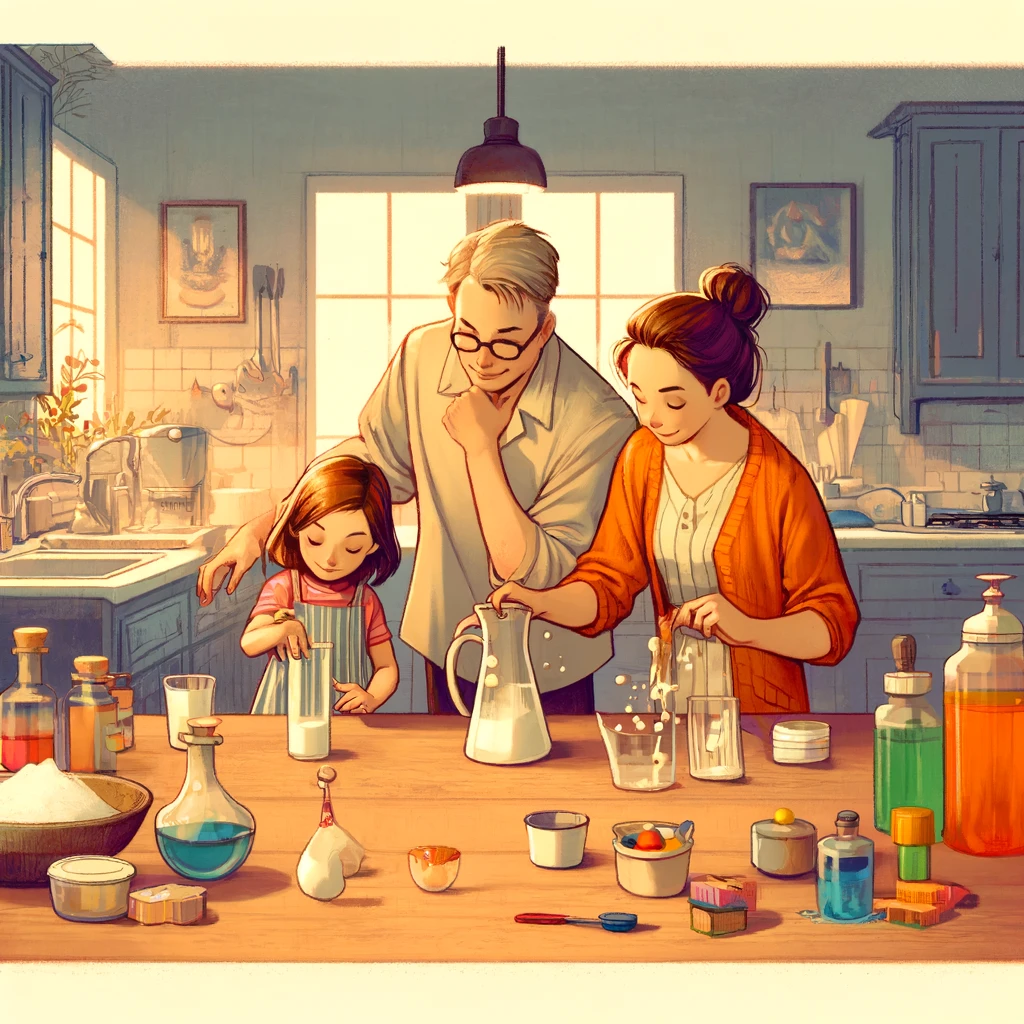
Before you start
The kitchen classics survive because they deliver — visible drama from cupboard ingredients in under ten minutes each. This hour runs five of them as a set, and steals one habit from real science that multiplies the value: before each experiment, everyone predicts what will happen, out loud. The prediction costs nothing and changes everything — a gasp means more when it's a gasp at being wrong.
The other upgrade is the why, delivered after the drama, one sentence long — the fizz is a gas being born; the pepper flees because soap breaks water's skin. One sentence, no lecture; the kids who want more will ask, which is the entire mechanism of scientific curiosity.
How it goes
The eruption
Bicarb in a glass or a built play-dough volcano, vinegar poured with ceremony — predictions first, then the fizz. Food colouring and a drop of washing-up liquid upgrade the lava. Rerun it immediately with the quantities swapped by the kids; varying one thing at a time is the method arriving via volcano.
Skittles and fleeing pepper
Skittles ringed on a white plate, warm water poured to the centre — the colour wheels crawl inward and it's genuinely beautiful; silence happens. Then the pepper trick — pepper scattered on water, one soaped finger touched to the middle, pepper flees to the edges like it saw something. The one-sentence whys land after each.
Invisible ink
Lemon juice on paper with a cotton bud — messages, maps, treachery. They dry invisible and develop brown under an adult-held iron or over a warm radiator. Secret messages between siblings will continue for days; this is the experiment with the longest tail.
The long game
The naked egg — one raw egg submerged in vinegar in a jar, then the daily observation as the shell fizzes away over two or three days, leaving a translucent, genuinely bouncy (gently — over a bowl) egg. Started today, it converts one hour of science into a week of breakfast check-ins, which is the best value in kitchen chemistry.
Make it fit your kids
Pouring crew for the volcano (hand over hand) and front row for everything else. Their prediction is always "it will go BOOM" and their satisfaction is total either way.
The core audience — predictions get bold, whys get demanded, and the volcano gets rerun to destruction. The invisible-ink espionage era begins here.
Hand them the variables — does warm vinegar fizz harder? Do skittle colours move at different speeds? — and a notebook. The hour becomes a fair-test workshop without anyone saying so.
They've seen the classics — give them the demonstrations to RUN for younger kids, whys and all. Performing science teaches it twice as deep, and the showmanship is theirs to keep.
Runs entirely on cupboard stock — the skittles are the only luxury and the pepper trick alone, free, has carried entire wet Tuesdays.
If it’s going really well
- The full science fair — questions, posters and presentations, when an hour's appetite proves bigger.
- Density towers and lava lamps — the next tier of kitchen classics, one bottle each.
- The naked egg's sequel — the finished egg in golden syrup shrivels, in water re-plumps; osmosis as a fridge-side soap opera.