Solar System Model
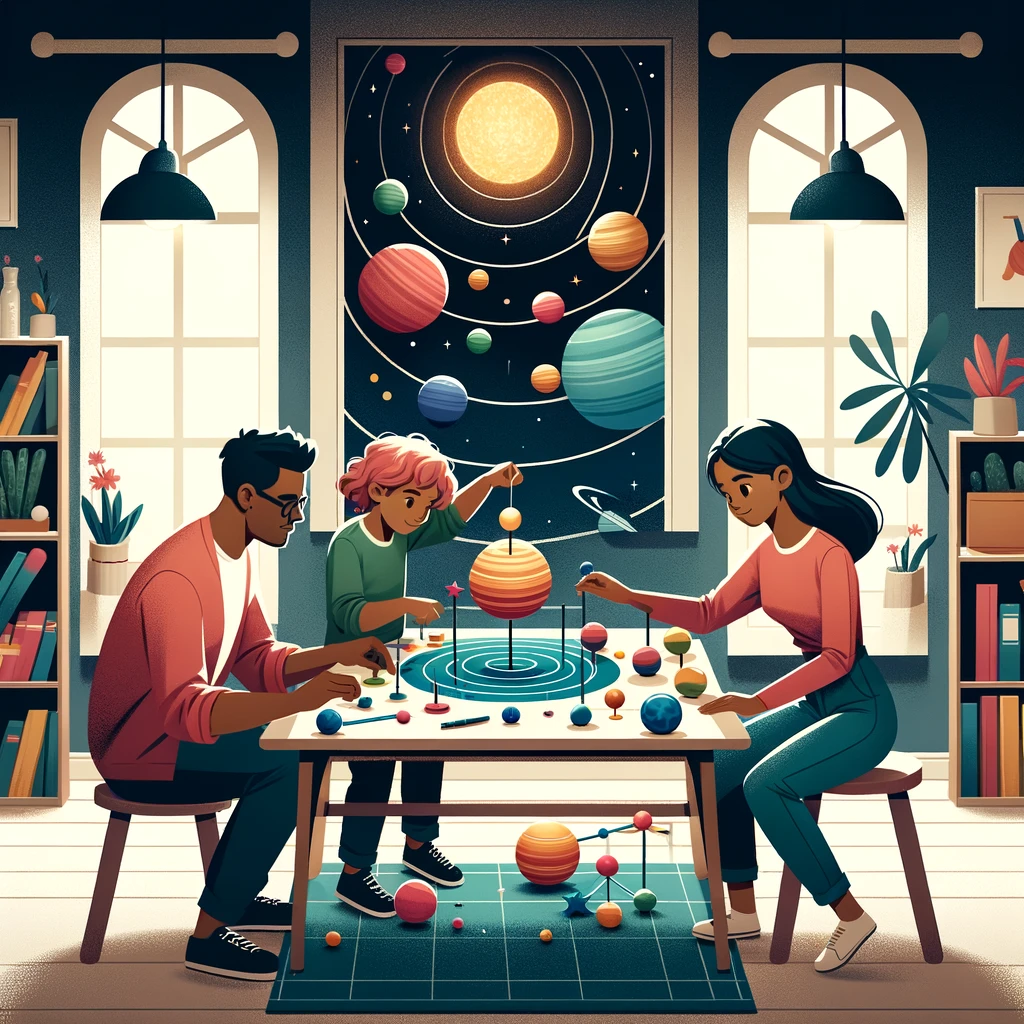
Half a day building the solar system twice — once as the classic hanging model for the bedroom ceiling, and once at true scale down your street, which is the five-minute add-on that does all the actual teaching. Paint Jupiter; then go find out where Jupiter really is.
Last updated
Before you start
The hanging-planets model is a lovely craft, and it teaches almost nothing true about space — every ceiling solar system lies about the one fact worth knowing, which is the emptiness. So this plan builds both: the beautiful lie for the ceiling, and the true-scale walk for the brain.
The scale walk is absurdly simple: if the Sun is a football by the front gate, Earth is a peppercorn twenty-five big paces away — and Neptune is most of a kilometre down the road. Kids who make that walk holding the peppercorn never think about space the same way again. Build the pretty model in the morning; walk the real one before tea.
How it goes
Planet factory
Eight planets (plus Pluto if your household still recognises it — this argument is traditional and healthy), sized relatively right — Jupiter dwarfs everything, Earth and Venus are twins, Mercury is a marble. Papier-mâché over scrunched newspaper cores, or straight to polystyrene. While spheres dry, research each planet's look — the reference matters because painting Jupiter's bands and the Great Red Spot from a picture beats painting a brown ball from memory.
The paint shop
Each artist claims planets — negotiate hard, Saturn is the prize because of the ring (card circle, glued mid-dry, slightly wonky, perfect). Sneak the facts in sideways while painting — why Mars is rusty, why Venus is smothered, why Uranus is on its side. Facts attached to paintbrushes stick better than facts attached to worksheets.
Rigging
String lengths staggered so planets hang in order without touching, knotted to the hanger or cane. Order gets learned here through pure logistics — My Very Easy Method mnemonic optional, arguing about which comes fourth mandatory. Hang it where it can spin slowly and shed glitter with dignity.
The true-scale walk
Football-Sun placed ceremonially at the gate. Pace out Mercury (10 big steps, pinhead), Venus (18, peppercorn), Earth (25, peppercorn), Mars (38, pinhead)... and keep going as long as legs allow — Jupiter's a small plum at 130 paces, Saturn a cherry at 240. Let a kid carry each planet to its spot and leave them standing there, waving to each other across the void. That wave is the lesson.
Make it fit your kids
They paint a planet each (outcome irrelevant, commitment total) and join the scale walk as far as Mars. Their solar-system fact ceiling is "Jupiter is the big one" and that's a fine ceiling.
Full planet-factory workers with strong mnemonic opinions. The walk astonishes them visibly — this is the age where you can watch the concept land in real time.
Hand them the scale maths — actual ratios, a calculator, and the discovery that at football-scale the nearest star is another football in roughly Australia. Watch that one detonate.
The model is beneath them; the maths isn't. Challenge — design a true-scale model where Neptune fits in the house, then work out what the Sun shrinks to. (A grain of sand. It bothers them for days.)
Papier-mâché over newspaper costs nothing but flour; the scale walk runs on a football and the contents of the spice rack. The polystyrene shortcut is the only line worth money.
If it’s going really well
- Add the Moon at true scale — a pinhead a hand-span from the Earth peppercorn, and suddenly the Apollo missions look different.
- Glow paint on the mobile and the bedroom gets a switch-off ritual.
- Pair with an evening of backyard astronomy while the facts are still warm.