Rock Painting
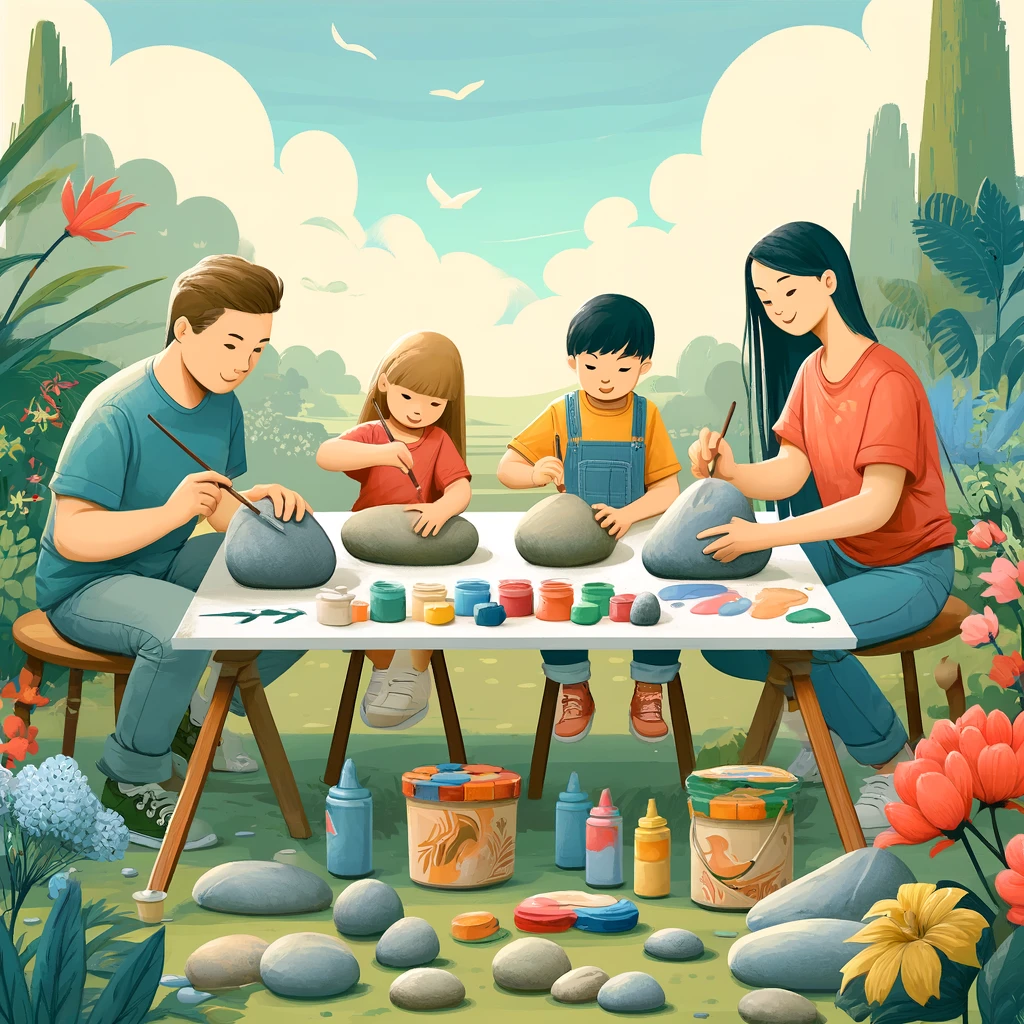
An easy rock painting activity for kids with prep, painting and display ideas in one session. Includes tips for younger kids, detail-loving older kids and outdoor hide-and-seek reuse.
Last updated
Before you start
Rock painting is craft plus geology plus, in its final act, a tiny anonymous kindness — because the finished rock's best destiny isn't the windowsill but a ledge on a footpath where a stranger finds it, grins, and rehides it. Whole communities play this game; a painted rock with "keep or rehide" on the back is a message in a bottle that doesn't need a sea.
Material truth that decides the results: smooth beats interesting, and light paint needs a dark base coat (or vice versa). A craggy rock eats detail; a smooth palm-sized stone is a canvas. Acrylic pens, if the budget runs to a set, transform what small hands can do — dots, eyes and letters that brushes smudge — and the dotting technique (cotton-bud ends dipped in paint) gives even the youngest painter a mandala.
How it goes
Stone selection and scrub
Wash the candidates and hold the draft — each painter picks their stones and declares intentions (the roundest goes ladybird; it always goes ladybird, and that's tradition, not failure of imagination). Dry thoroughly; paint on damp stone lifts by teatime.
Base coats
One solid colour per stone, edge to edge — the step kids want to skip and the step that makes everything after look intentional. Dry time is biscuit time; acrylic dries in minutes in a warm kitchen.
The detail studio
Pens and dots do the work — ladybird spots, monster eyes, rainbow gradients dot by dot, one-word message rocks (HELLO, SMILE, the finder's-choice classics). The cotton-bud dot is the great leveller; a mandala of rings is patience made visible and needs zero drawing skill. Names or "rehide me" on the backs of any stones bound for the wild.
Deployment
The keepers take posts — windowsills, plant pots, the doorstep pest-controller. The travellers get varnished, then hidden on the next walk — visible-ish, weatherproof, on ledges and stumps at kid height, because kids are the finders you're hoping for. The family that hides rocks checks those ledges forever after, and the day one of yours has moved is a disproportionate thrill.
Make it fit your kids
Base-coat specialists and dot-makers — a cotton bud and two colours yields something frameable, and the scrubbing station is a legitimate happy posting for the fully small.
Ladybird laureates — spots, eyes, monsters and message rocks, plus maximum investment in the hiding game and the checking of ledges forevermore.
Technique arrives — mandala dotting, tiny scenes, lettering that lands. They'll run the weatherproofing bench and plan hide locations with cartographic seriousness.
The aesthetic tier — pen work worth photographing, a themed set (constellations, eyes, tiny landscapes) and the quiet discovery that painted rocks are currency at school in ways nobody explains.
Stones are free where stones are, ordinary poster paint plus a PVA topcoat stands in for acrylics, and cotton buds outperform brushes anyway — the pen set is the only upgrade worth pocket money.
If it’s going really well
- The story-stone set — characters painted on six stones become a bag of infinite bedtime prompts — draw three, tell the tale.
- Garden markers — painted rocks labelling the herb pots and veg rows; craft with a job.
- The rock trail — five stones hidden along one favourite walk with a map made for visiting cousins.