Homemade Playdough
A reliable homemade playdough activity using common kitchen ingredients, plus easy color and texture variations. Great for toddlers through early primary ages.
Last updated
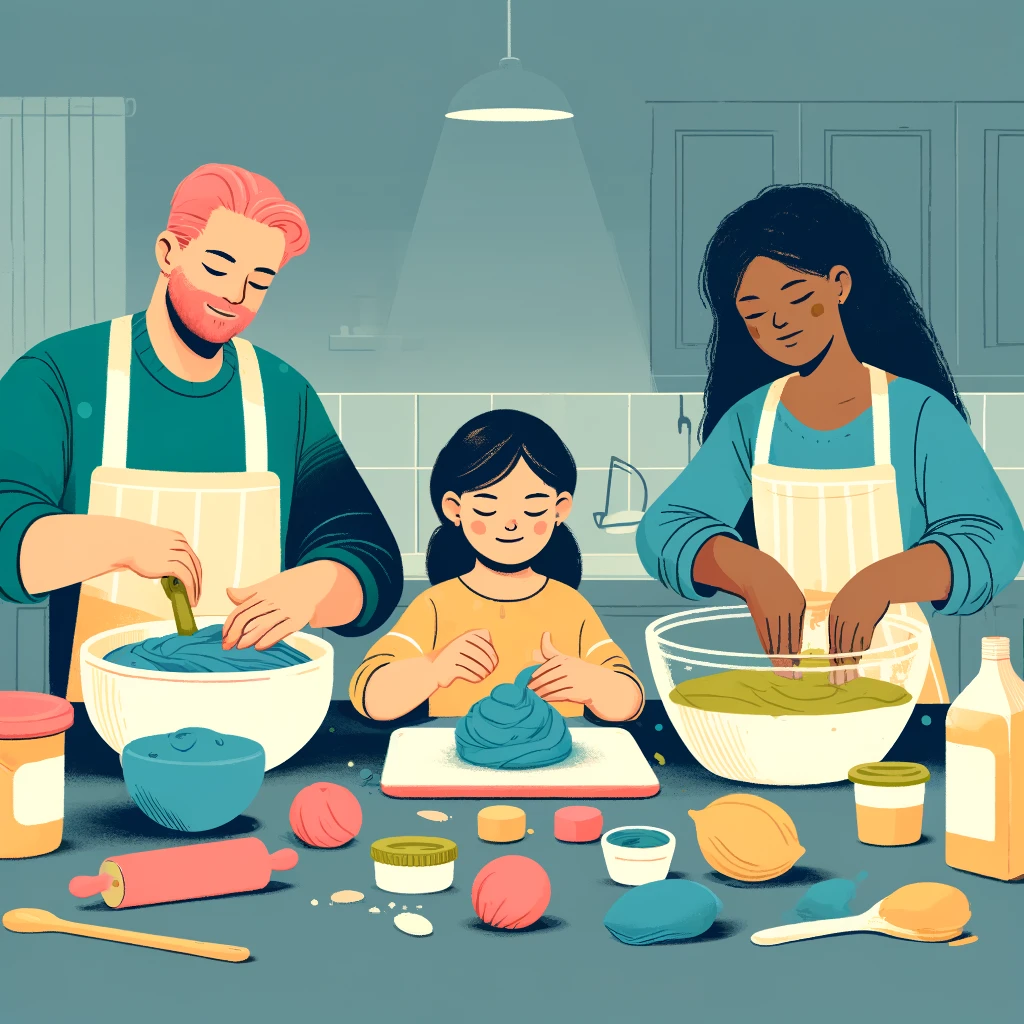
Before you start
Homemade playdough isn't the budget option — it's the better product: silkier than shop dough, made in any colour the food-colouring shelf allows, and warm from the pan for its first squish, which is a sensory experience the tub can't sell. The cooked recipe (flour, salt, cream of tartar, oil, water, colour — stirred over low heat until it balls) keeps for months in a tub and takes fifteen minutes including arguments about colour.
The bit that makes it an activity rather than a chore: the kids make it. Measuring, stirring the cold stage, watching the magic moment when sludge becomes dough (it happens all at once, and it's genuinely dramatic), then kneading the warmth out of it. Where dough comes from turns out to be a satisfying thing to know at four.
How it goes
The measuring
Kids measure and tip everything into the pan cold — cups levelled, salt poured, the colour negotiation conducted at cabinet level (two batches, two colours, ends most wars). Stir the cold sludge together; it looks like a mistake, which makes what's coming better.
The transformation
Low heat, constant stirring, kids watching from step-stool distance — for two minutes nothing, then the sudden gathering as the sludge pulls itself into a ball. Announce it like the event it is. Tip it out, and once it's cooled to warm, hand it over for the kneading, which kids do with their whole bodies and which finishes the dough perfectly.
The studio
Tools out and let it run — the garlic press (hair, spaghetti, worms — the greatest playdough tool ever made), cutters, the blunt knife for legitimate cutting practice. Sit and make alongside; your terrible snail matters. Little kids need no agenda; older ones take a commission ("the full English breakfast, in dough") and disappear into it.
The bakery counter
Finished works displayed and toured — the dough café serves whatever got made, priced in pretend money, eaten with pretend relish (the no-real-mouths rule holds even for the most convincing croissant). Then the tub ceremony — dough balled, tubbed, labelled with its birth date. It keeps for months and comes out faster than the telly goes on.
Make it fit your kids
The core audience — measuring with help, kneading with devotion, then an hour of press, squash and worm production. Warm first-squish rights are theirs by law.
Recipe-runners (cold stages solo, hot stage supervised) and ambitious sculptors — the dough café, the full English commission, the multi-colour marbling discovery.
They've outgrown the dough but not the chemistry — hand them the recipe variables (what does the cream of tartar do? double oil?) and a younger sibling to manufacture for; process engineering disguised as babysitting.
Their lane is the deluxe production run for small siblings or cousins — custom colours, scent drops, a labelled gift set. Fifteen minutes of kitchen work, disproportionate credit.
Pence per batch against pounds per tub — flour and salt are already in the cupboard, and cream of tartar's one small pot makes a dozen batches.
If it’s going really well
- The colour-mixing lab — two primary batches and the discovery that dough mixes like paint, slowly and forever.
- Dough dioramas — a shoebox scene populated over a week, hardening into permanence on the radiator.
- Bread next — the same hands, the same kneading, a dough that rises and gets eaten; the gateway drug worked.