Ice Painting
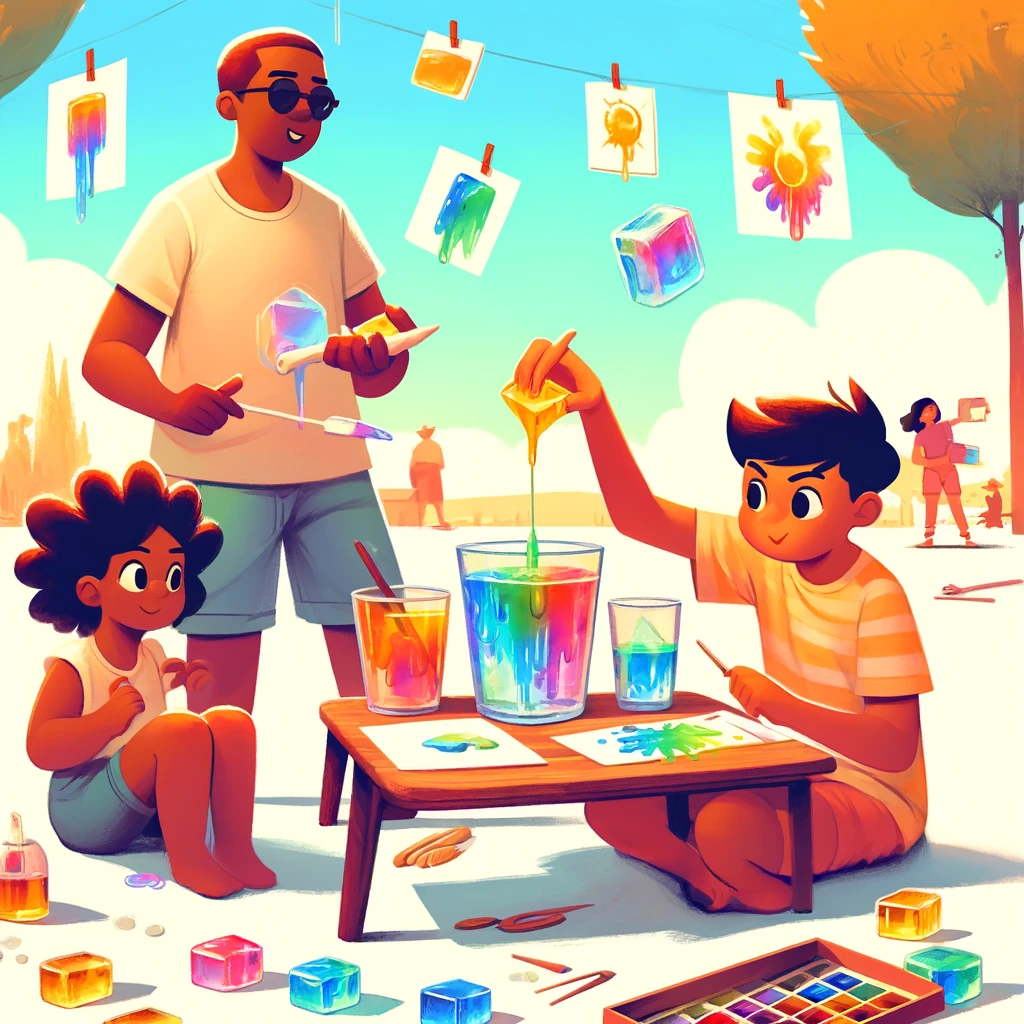
An hour of painting with ice — coloured cubes frozen overnight (water, paint, a lolly stick each) glide and melt across paper, blending as they go. Half sensory play, half colour theory, and self-tidying in warm weather since the medium evaporates.
Last updated
Before you start
Ice painting needs the night-before move — an ice cube tray filled with water and a good squeeze of paint per cube, lolly sticks planted as they half-freeze — and pays out the next day as melting crayons that paint, blend and puddle in ways brushes can't. The cold in the hand, the colours bleeding into each other as they thaw, the racing of a drip — it's colour theory delivered as sensory play.
The medium's quirk is its schedule: the painting changes after you stop. Melting cubes keep spreading, colours keep marrying, and the finished work ten minutes later isn't the one you left — which kids find either magical or outrageous, and either way it's a lesson about letting go that arrives disguised as craft.
How it goes
The night-before freeze
Tray filled, colours squeezed and stirred cube by cube (the mixing is tonight's mini-activity — one kid, one teaspoon, big decisions), then into the freezer with sticks added at the hour mark when the cubes can hold them upright. Label the tray ART or someone's drink acquires a surprise.
The reveal
Cubes popped and distributed — cold hands immediately, which is half the sensory point. First contact with paper does nothing for a beat, then the melt begins and the colour flows; the pause-then-flow is the medium introducing itself.
The studio
Glide, dot, puddle and blend — two cubes racing down a tilted board, colours parked touching to watch them marry, the print left by a cube abandoned mid-paper. Outdoors on a hot day, the patio itself is a canvas that self-cleans; indoors, the tray-and-towel rig keeps the thaw honest. Little ones go pure sensory; bigger ones start engineering drip races and deliberate blends.
The gallery of change
Works set somewhere flat and revisited before tidy-up — the ten-minute-later versions, spread and blended by the ongoing melt, get compared with what the artist remembers making. Photograph the favourites at their peak (the medium's only permanence), and the surviving cubes go back to the freezer for a second session that never quite matches the first, which is also part of the lesson.
Make it fit your kids
The core audience — cold, colour and permission to smear is their complete artistic manifesto. Food-colouring cubes, bare arms, and the warm-water bowl on standby.
Engineers of the melt — drip races, blend experiments, prints and the tilted-board discovery. They'll design tomorrow's colour lineup before today's cubes finish.
Reframe as process art — salt scattered on the melt (it carves channels; genuinely striking), watercolour paper, and photographing the work at intervals as it evolves. The change becomes the medium.
The salt-and-ice technique on good paper produces abstract work worth keeping — offer it as a one-off texture experiment for the art-inclined, no toddler framing attached.
An ice tray, water and the paint already in the craft drawer — effectively free, and the food-colouring version costs pence per rainbow.
If it’s going really well
- Salt on the melt — channels and blooms carve through the colour; the science-art crossover upgrade.
- Giant cubes — yoghurt pots frozen overnight make boulder crayons for pavement-scale work.
- Winter inversion — coloured water frozen in balloons outdoors makes ice marbles; the same medium at landscape scale.