Vegetable Gardening for Kids
A whole-day plan to launch a kids' vegetable patch — or a big tub operation on a patio. Morning is groundwork and a seed plan built around things they'll actually eat; afternoon is planting, labelling and rigging the daily-care routine so the patch survives week two.
Last updated
Before you start
This is Garden Day's practical sibling — everything you plant is food. That single fact changes how kids treat it: a flower is nice, but a plant that becomes their own chips gets checked daily without being asked.
Choose crops by two rules. First, only grow what they'll actually eat — a triumphant courgette harvest nobody touches teaches exactly the wrong lesson. Second, stagger the payoffs: radishes in three weeks, salad leaves in five, potatoes-in-a-bag for the big summer dig-up, and one tomato plant for the long game. The three-week radish is what carries them to the five-week lettuce.
How the day goes
The menu meeting
Start at the table, not the soil — what do they actually eat? Build the planting list from real answers. Radishes go on the list even if nobody's sure about them, because three weeks to harvest makes them the gateway vegetable. Draw the patch plan with rows assigned by name.
Groundworks
Dig, weed, break up the lumps, pick out the stones into a bucket (stone-bucket duty is weirdly popular). Tub gardeners fill and position their containers — sunniest spot wins. Aim to finish the heavy work by lunch while enthusiasm is still high.
Growers' lunch
Eat something containing what you're about to plant — a salad, chips, tomato sandwiches. It connects the seed packet to the plate in a way no explanation manages.
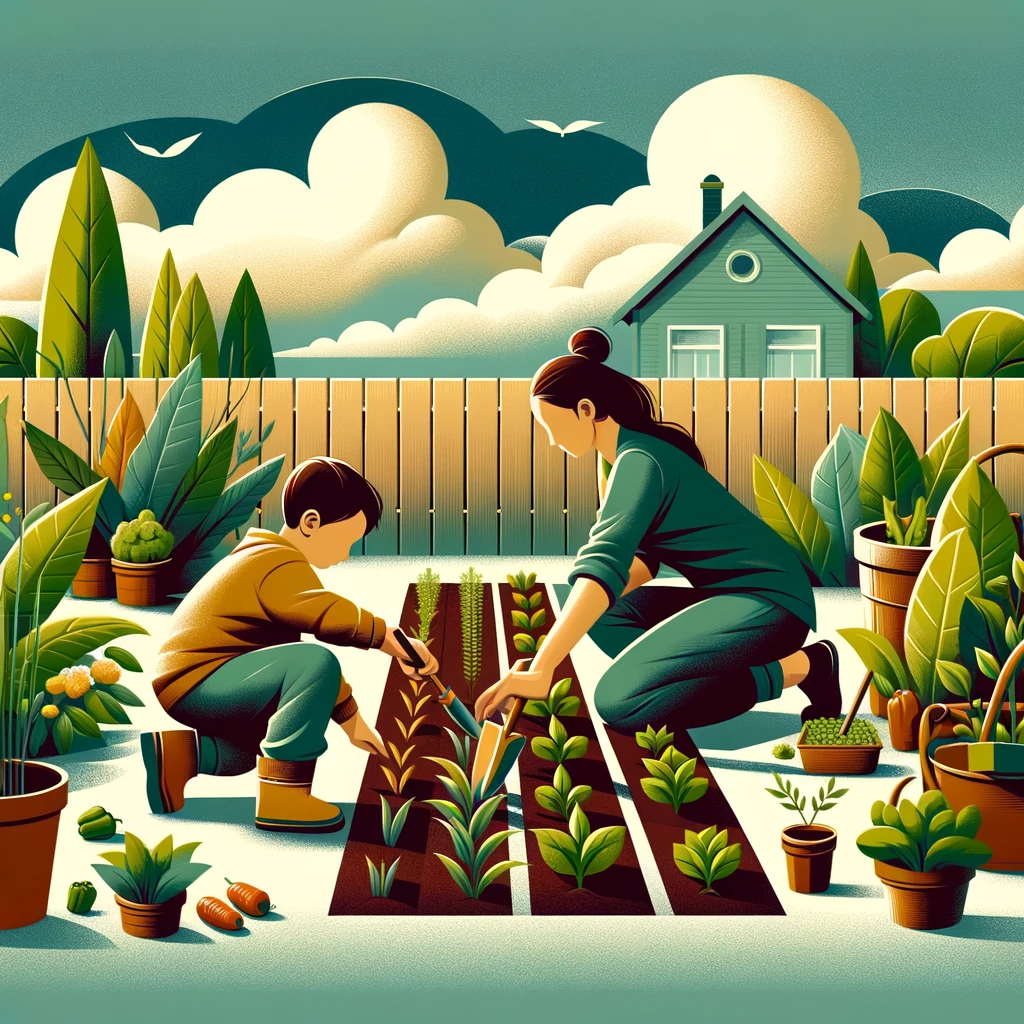
Planting rows
Rows marked with string, seeds spaced by kid-fingers ("two fingers apart" beats centimetres), everything labelled with the crop and the grower. The potato goes in its bag with ceremony — it gets earthed up over weeks and tipped out in summer like treasure.
The waterworks
First watering, then rig the routine — the can lives by the back door, the rota goes on the fridge, and checking the patch gets attached to something that already happens daily (after breakfast works). The habit is the harvest; everything else is compost.
Make it fit your kids
They plant the big seeds (beans, potatoes), do all watering with supervision on volume, and eat the first radish with deep suspicion. Their real crop is the routine.
Full farmers — rows, labels, rota and the daily slug patrol are all genuinely theirs. This is the age the patch-check becomes a before-school fixture.
Give them the seed budget and catalogue the week before. One ambitious crop (sweetcorn, pumpkin) with real failure risk teaches more than three safe ones.
Chilli plants and herbs they'll cook with, grown on their own windowsill under their own regime. Autonomy is the fertiliser at this age.
Supermarket value-range seeds grow the same vegetables, a sprouting potato from the cupboard replaces a bought seed potato, and cut-open milk bottles make labels, scoops and slug fences. Total spend can sit under two pounds.
If it’s going really well
- A harvest meal in late summer where everything on the plate has a grower's name attached.
- Sunday photo diary of the patch — same angle, every week. August-you will thank June-you.
- A market stall for the surplus — honesty box at the gate, proceeds to the growers.