Sand Art Bottles
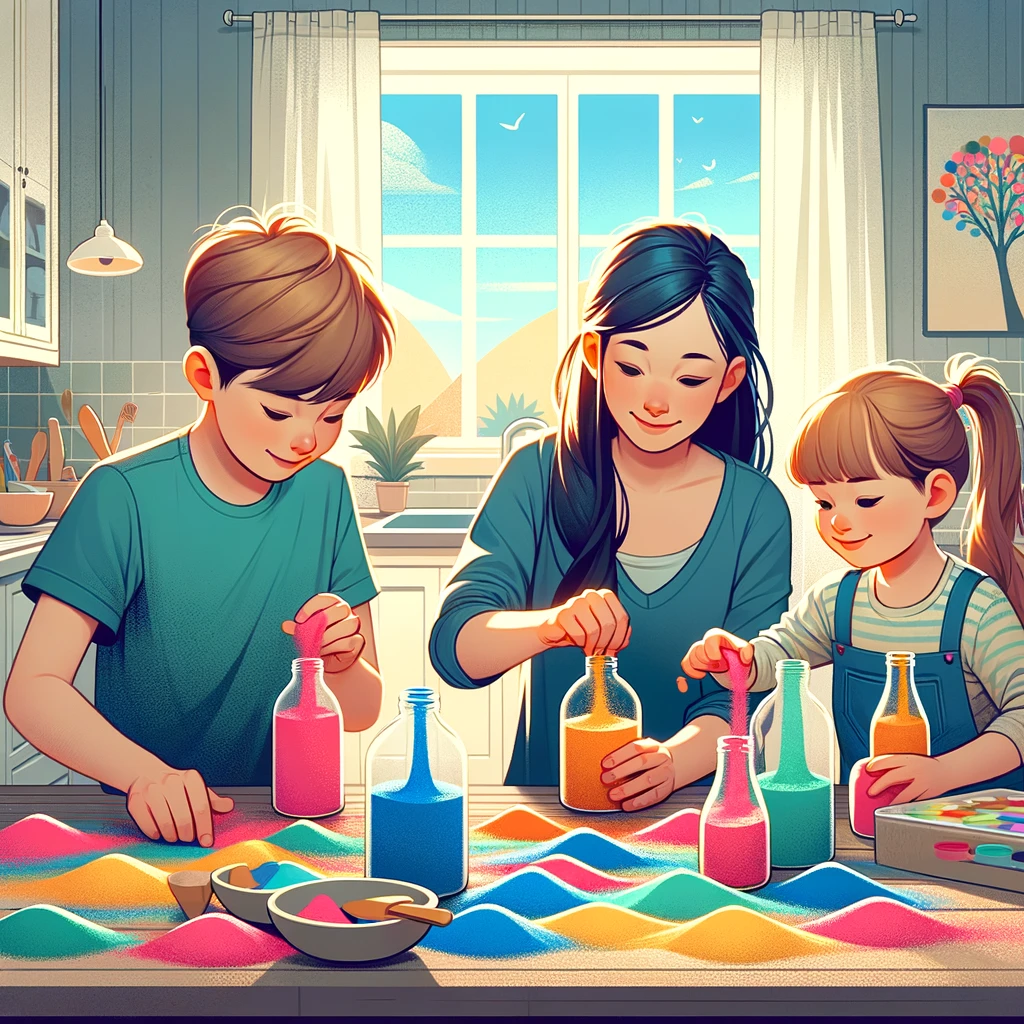
An hour of layer-craft — colouring the sand (the chalk-grinding method is an activity in itself), then funnel-pouring stripes into jars and bottles, with the tilt-and-pour techniques that turn stripes into waves and mountains. Sealed properly, they last years on a shelf.
Last updated
Before you start
Sand art is geology at craft speed — sediment layers laid down one pour at a time, visible through the glass, permanent once the jar fills. The pouring itself is the appeal: the funnel's control, the stripe's arrival, the decision about what colour the next era will be.
Two technique notes carry the hour. Tilting the jar mid-pour turns flat stripes into diagonals, waves and mountain ranges — the difference between a striped jar and a landscape in glass. And the jar must be filled to the absolute brim before sealing — any air gap and the layers migrate into brown soup on the first shake, which is a heartbreak with a one-word prevention: brim.
How it goes
The colour works
The chalk method, which is half the activity — a stick of coloured chalk rolled and ground against sand in a tub (a jar lid makes a good grinding plate) until the colour takes. Each artist produces a palette of four or five tubs. Salt takes chalk colour even faster for the budget build. The grinding is satisfying, slightly effortful and completely absorbing — protect it from being rushed.
Pouring school
One demonstration jar — the funnel's flow, the stripe's arrival, and the two reveals — the tilt (diagonal strata, gasps) and the skewer-poke down the glass edge (it drags the layers into peaks — the advanced move, used sparingly or the strata collapse). Then the jars are theirs.
The stratigraphy studio
Layer by layer, era by era — thick stripes, thin lines, tilted waves, the buried single-colour "treasure layer" that only its maker knows about. The funnel passes politely or exists per-artist depending on the household's diplomatic climate. Landscapes emerge — sunsets happen unprompted, mountains get named. The only rule enforced from outside is the brim rule, checked before every lid.
Sealing and the shelf
Jars filled to touching the lid, tapped gently to settle, topped again — then sealed, with tape under the lid for the under-fives' bottles because shaken sand art is a genre of tragedy. Labels with title and artist ("Sunset Over Nowhere", aged 6), and the gallery shelf arranged where light comes through the glass. One jar is traditionally a gift; grandmothers have shelves waiting for exactly this.
Make it fit your kids
Grinders and pourers with hand-over-hand funnel service — their jar is stripes of enthusiasm, taped shut immediately and displayed centrally. The tub-mixing stage is their happy place.
The layering heartland — treasure layers, named mountains, tilt experiments and the pride of the brim-checked seal. Gift production begins here unprompted.
Technique tier — the skewer-drag peaks, deliberate colour gradients, and bottle shapes chosen for the design. Introduce the sand-pendulum experiment (a bottle swinging over a tray) and the craft goes kinetic.
The aesthetic version stands on its own — monochrome gradients in good glass, terrarium-adjacent styling for their shelf. Offer the materials and the bench, not the framing.
Salt plus chalk is the pence-level version and arguably the better activity — the grinding IS the craft. Jars from the recycling, funnel from a rolled cereal-box liner.
If it’s going really well
- The pendulum draw — a punctured bottle of sand swung over dark card; physics drawing pictures.
- Terrarium graduation — the sand layers become the base for the succulent jar, and the craft acquires a tenant.
- The strata story — a jar built to tell the family's year, one colour per event, decoded on the label.