Indoor Mini Golf
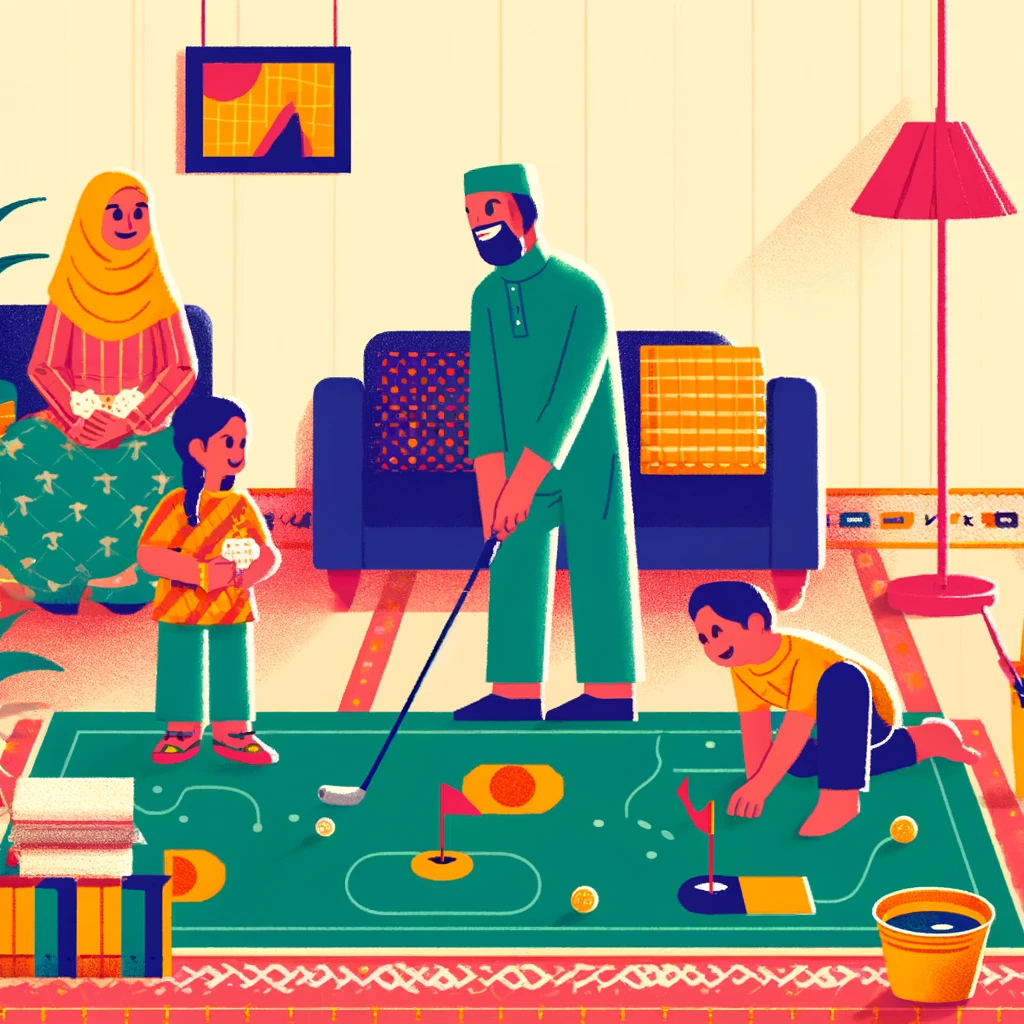
An hour building and playing a nine-hole course through the downstairs — cups on their sides, obstacles from the toy box, par set by committee. The course design is half the activity; the back-nine grudge match is the other half.
Last updated
Before you start
Indoor mini golf runs on the same engine as the best garden games — the kids build the course, and builders play harder. A cup on its side is a hole; a wooden spoon is a putter; and the house's ordinary furniture becomes the hazard list (the table-leg slalom, the rug's cruel slope, the hallway's par five).
The design rule that makes nine holes actually fun: every hole needs one idea, not five. A ramp OR a tunnel OR a moving obstacle (the swinging tea-towel pendulum is the course's Augusta) — kids who stack five gimmicks on one hole build an unplayable shrine; one idea per hole builds a course. Par gets set by playing each hole once and voting, which is the fairest system golf has ever known.
How it goes
Course architecture
Nine holes claimed and built — each designer takes two or three and applies the one-idea rule. Holes get names (this is mandatory and the names are the best part — "The Sock Pit", "Grandma's Corner", "Doom") and the course map gets drawn. A test putt per hole checks it's hard-but-possible; the impossible hole gets one mercy modification, decided by its architect with the room watching.
Setting par
One committee lap — everyone plays each hole once, the strokes get averaged by argument, and par goes on the scorecard in pen. This lap doubles as the practice round and the last moment of friendship before competition begins.
The championship
Full round, strict order, scores kept aloud — the counting IS the maths practice, and the etiquette rules (quiet on the tee, no moving the tunnel mid-putt) get enforced with more theatre than any real club. The tea-towel pendulum hole produces the round's drama; the rug slope produces its heartbreak. Adults play with handicaps (wrong hand, one eye shut) that get renegotiated hole by hole.
The nineteenth hole
Scores totted, the green jacket awarded (any jacket, ideally hideous), and the specialist trophies distributed — best hole design, most creative rules dispute, bravest recovery from under the sofa. The course stays up if the household can bear it; the solo practice rounds that follow before dinner are how next week's champion is quietly built.
Make it fit your kids
Their hole is point-blank with a giant cup and unlimited attempts, celebrated per contact rather than per success. They also operate the pendulum, a role of magnificent power.
The design-and-name heartland — holes of gothic ambition, fierce par debates and score-keeping that improves visibly across one afternoon.
Course architects in full — banked ramps, multi-room doglegs, a water hazard (tray, towel underneath, courage). Give one the tournament-director clipboard and the etiquette enforcement becomes self-sustaining.
The trick-shot department — they'll skip the round and appear for the pendulum challenge, then stay when the leaderboard slights them. Filmed trick-shot attempts are the format's natural teen annex.
Free wall to wall — cups, spoons, books and the sock pile were all in-house, and the green jacket came from the dressing-up box wearing its destiny.
If it’s going really well
- The masters series — the course rebuilt monthly with one new signature hole; the green jacket accumulates history.
- Glow golf — torches off, one lamp, luminous stickers on the balls; the same course, entirely new game.
- Crazy-golf field trip — the real thing visited once, purely so the family course can be declared superior on the drive home.