Indoor Camping
An indoor camping plan for kids that feels like the real thing: den setup, camp-style food, low-light games and a calm wind-down. Great for rainy evenings and mixed ages.
Last updated
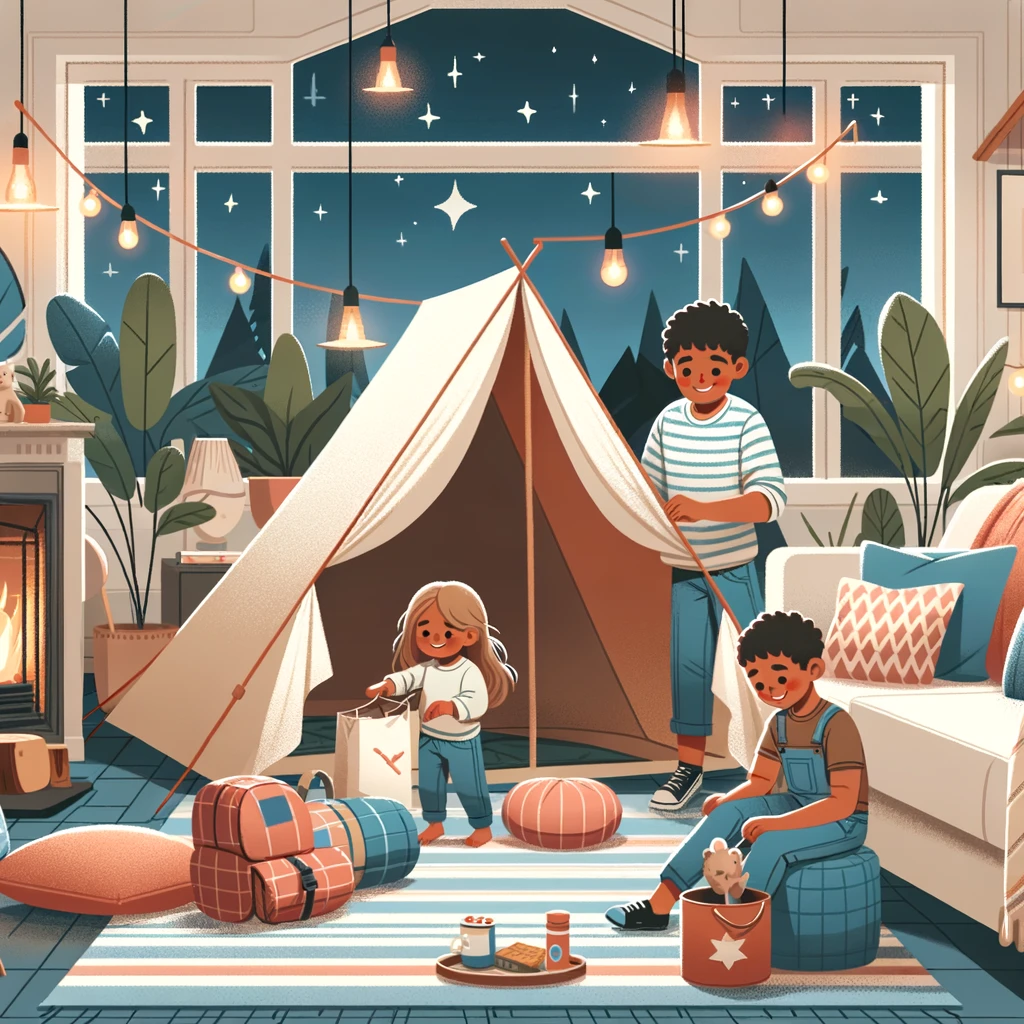
Before you start
Indoor camping lives or dies on commitment to the bit. The tent (or blanket den) is the easy part — the difference between "we put a tent up inside" and a day they talk about for months is the rituals: camp names, a fake campfire, wildlife spotting through the window, supper eaten cross-legged on a groundsheet.
The trap to avoid: letting the normal house leak in. Television off, sofa out of bounds ("that's the lake"), lights replaced by torches after dusk. The living room has to stop being the living room by about 4pm — the kids will police this more fiercely than you will once it clicks.
How the day goes
Trailhead
You don't just start camping — you travel there. Pack rucksacks, lace boots, and hike the long way to the living room via every room in the house, pointing out scenery ("watch the ravine on the stairs"). Arrival at the campsite is announced. Ceremony matters.
Pitching camp
Tent or den up together, beds laid out, kit stowed. Build the campfire centrepiece — twigs or rolled paper in a ring, fairy lights and orange tissue inside. Campsite rules get written and posted; expect "NO WORK ALOUD" and honour it.
Trail lunch
Rations on the groundsheet — things in wraps, cut fruit, a shared flask of something. Flask tea tastes different and everybody knows it. After lunch, the wildlife hike — binoculars (toilet-roll or real) at the window, logging every bird, cat and suspicious squirrel in the camp record.
Camp craft hour
One proper campsite activity — friendship bracelets, paper-plate compasses, learning two real knots on a dressing-gown cord. Quiet hands-on stuff. This is the lull that makes the evening land harder.
Dusk
The big lights go off and stay off — torches only from here. Supper cooked "on the campfire" (delivered from the kitchen with a straight face), marshmallows toasted over the fairy-light flames, then stories in the tent. Told, not read, torches under chins. If they sleep in the tent, you've won the day; if they don't, the story time already justified it.
Make it fit your kids
The tent is the whole event — in, out, in, out, zip, unzip. Keep the fiction light, the torches ready early, and expect the campfire to be rebuilt by small hands eleven times.
Peak campers who will out-commit you. They'll write the camp rules, run the wildlife log and insist the sofa-lake rule applies to you too. It does.
Camp leaders — they plan the menu, rig the den engineering and run story time for younger ones. Hand over the head torch and the authority together.
They'll sneer, then drift in around marshmallow o'clock. Give them the campfire build brief and cinema-grade lighting control and they'll stay past stories.
No tent needed — chairs, blankets and pegs build a better den anyway. The campfire is free (paper and any lights you own), and supper is whatever was already for dinner, served on the floor with conviction.
If it’s going really well
- Full overnight in the den — morning camp breakfast on the groundsheet finishes the story properly.
- The campsite gains a shop — prices in pebbles, run by whoever's youngest with strong opinions on stock.
- Do backyard camping next fair-weather weekend — this was the training camp, and they're ready.