Historical Reenactment Day
A whole-day plan where the family picks one historical era and commits — costumes from household stuff in the morning, era-appropriate lunch at midday, and an afternoon of living the period's greatest hits. History retention rates that no worksheet has ever matched.
Last updated
Before you start
Pick the era together the night before, and pick specific — not "the olden days" but Romans, Tudors, Victorians, Vikings, Ancient Egypt. One era, played all day, beats a whistle-stop tour. The kids' school topic is the cheat code here: reenacting what they're currently studying makes you look like a genius and makes their teacher's life easier.
What makes the day work: facts get smuggled in through jobs, never announced as lessons. Nobody wants a lecture about Roman food — but a centurion sent to the kitchen to prepare a feast of bread, grapes and honey learns the same thing standing up. Give every fact a costume and a task and it sticks.
How the day goes
Entering the era
Everyone takes a period name and a role — not just soldiers and queens, but a baker, a scribe, a suspiciously wealthy merchant. Costumes built from the airing cupboard. The rule that makes it sing — everyone stays in character when addressed by their era name, all day, adults doubly so.
The workshops
Make the era's kit — Roman shields with painted eagles, Egyptian collars from paper plates, a Viking longship from the recycling. Scribes tea-stain a proclamation and write the day's laws in their best ancient hand. Two or three makes, kept rough — speed over craft.
The feast
Lunch is the era's food, eaten the era's way — Romans recline, Vikings toast (juice) and slam cups, Victorians sit in terrifying silence until somebody breaks (thirty seconds, historically). This is the bit they'll reenact at school, so give it full production values.
Living history
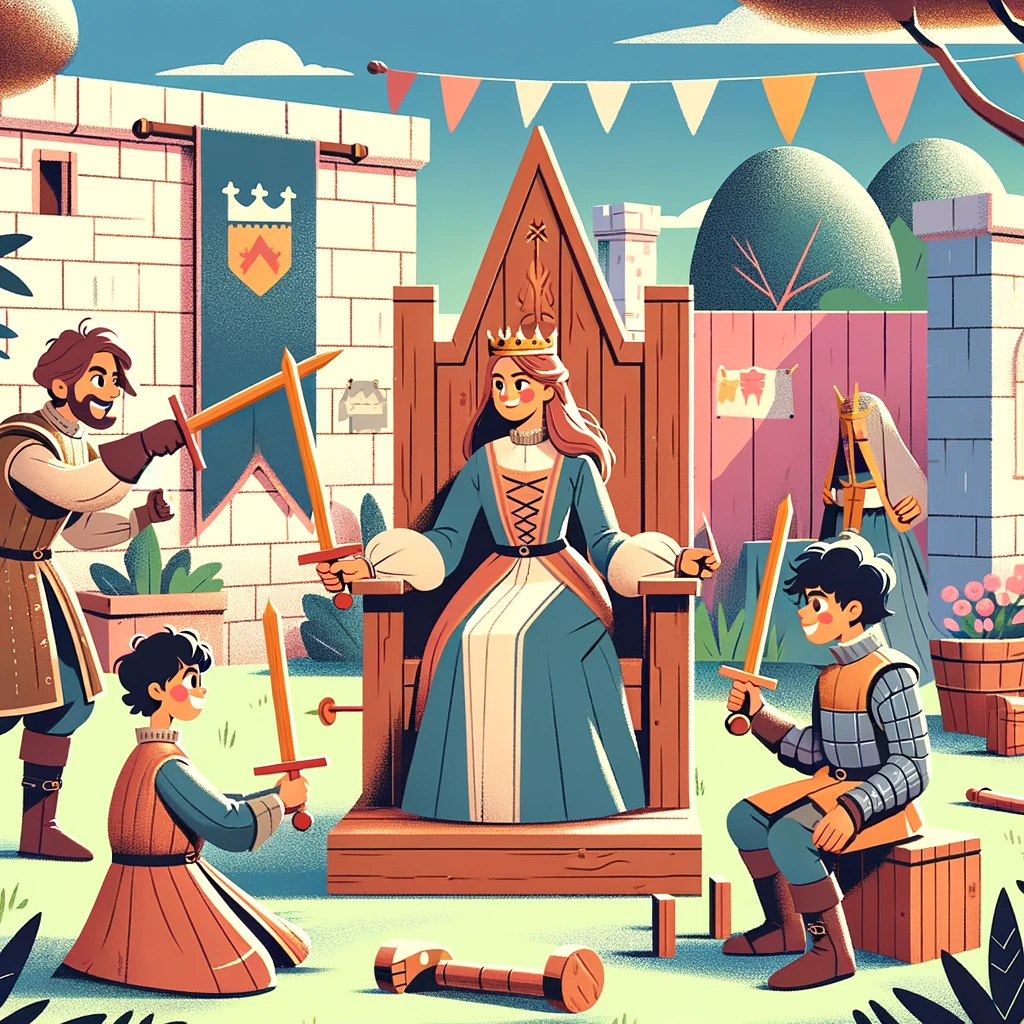
The era's greatest hits, performed — a Roman legion drills in the garden, a Victorian school hour runs with slates and a strict teacher (a role kids fight for), a castle under siege defends the stairs. One big set piece beats five small ones. Let the book settle arguments about how it really went.
The museum of today
Close the loop — everyone presents one artefact from the day to the "future" (you, back in normal clothes, being amazed). Photos in full costume, then the debrief over biscuits about what was actually true and what we made up. That conversation is where it all sticks.
Make it fit your kids
They're era-agnostic — a small Roman in a pillowcase tunic who mostly guards the biscuits. Give them a shield and a title (Guardian of the Snacks) and they're immersed.
Deep immersion age. They will correct your historical errors by afternoon and stay in character through dinner. Feed their era a fact at breakfast and watch it become law.
Chief researchers and battle choreographers — they design the set piece from the book and drill everyone else. School-topic eras earn them classroom glory on Monday.
Documentary crew or the era's most sarcastic noble. A teenager doing a straight-faced period drama with younger siblings produces the year's best footage.
Every costume comes from the airing cupboard, every prop from the recycling, and the feast is bread, cheese and fruit you'd have bought anyway. History is the cheapest place to spend a day.
If it’s going really well
- Era week — one meal per era across the week, passport stamped at each, argued about at the end.
- Visit the real thing — the local museum or castle hits different when they've already lived there badly.
- The saga gets written up and illustrated as the official chronicle, tea-stained and framed.