Family Memory Book
A whole-day plan for building a scrapbook that's actually about your family, not about scrapbooking. Morning is the great gathering — photos, tickets, drawings, the shoebox stuff. Afternoon is making pages together, each person owning their own spread, then binding and a first reading.
Last updated
Before you start
The raw material already exists — the photo drawer, the ticket stubs in coat pockets, the drawings too good to bin, the stories that get retold every Christmas. This day just gets it into one book before the drawer wins. It pairs beautifully with a rainy Sunday and absolutely cannot be done well in under a day, which is why the drawer keeps winning.
One decision beats all others: this is a book of stories, not a photo album. Every photo that goes in gets its story written next to it — what happened just before, what got said, why it's funny. A photo with a story is a memory; forty photos in plastic sleeves is homework. Fewer pages, more words.
How the day goes
The great gathering
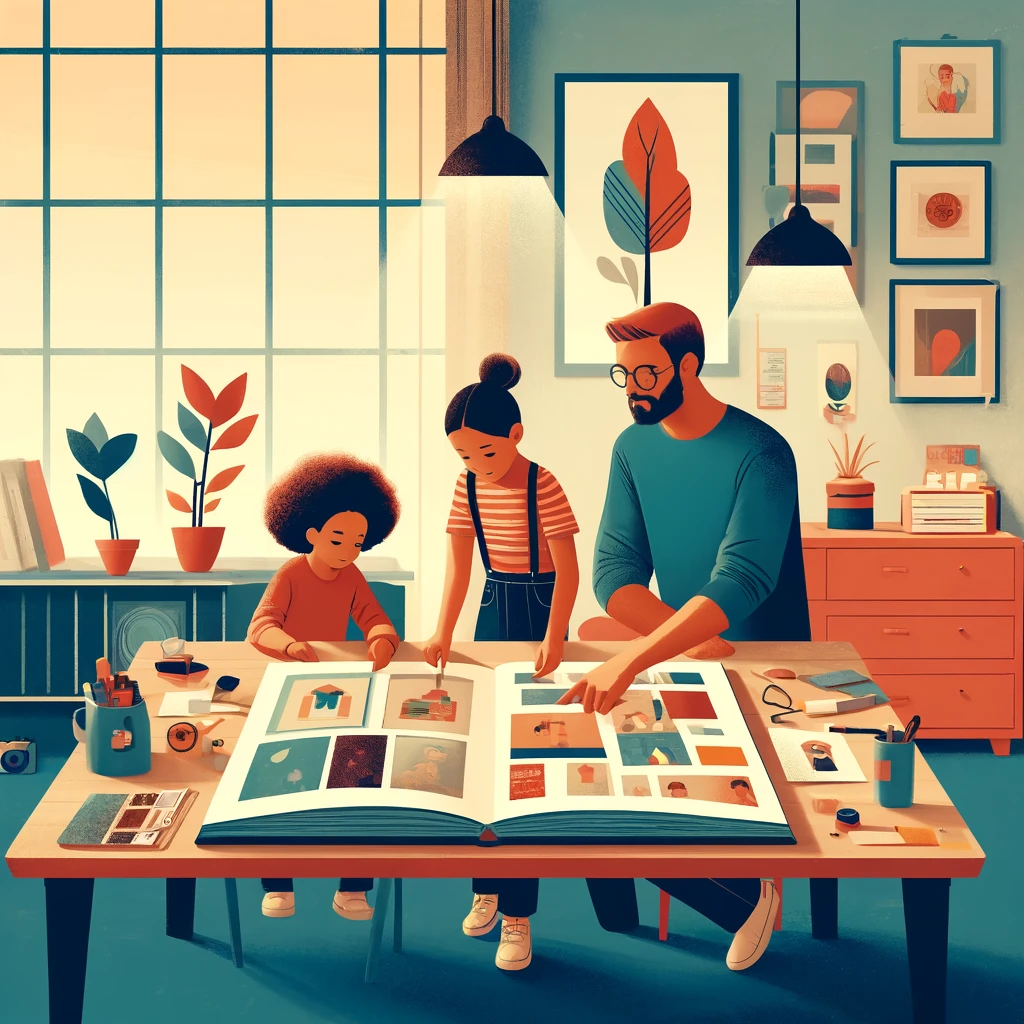
Everyone raids the house for memory material — photos, tickets, postcards, the medal, the pebble from that beach. Everything onto the big table. Then the sift, which is the day's best conversation — every object someone rescues needs its story told out loud to earn a page. The stories you hear during the sift are the book.
Claiming pages
Divide the book — each person gets their own spread to fill however they like, plus shared pages for the big stuff (holidays, the pets, the kitchen-disaster hall of fame). Rough-plan the shared pages together so the same holiday doesn't eat four spreads.
Curators' lunch
Eat over the material and settle the disputed classics — whose version of the seagull incident goes in the book? (Both. Side by side. Labelled "disputed".) Vote on the cover concept.
Page making
Glue, write, draw. The rule from the overview applies at the table — every photo gets its story in somebody's handwriting, spelling intact. Little kids dictate to big kids. Envelopes go in as pockets for the pebble-grade treasures. The hand-print page happens now, while wet hands can head straight to the sink.
Binding and the first reading
Cover art, a title (family vote, no vetoes), the date, and everyone signs the first page like the authors they are. Bind it, then the ceremony — one full read-through aloud on the sofa, everyone presenting their own pages. It goes on a real shelf, not in a drawer. Drawers are where this project started.
Make it fit your kids
Hand prints, scribble portraits and supervised gluing. Interview them for captions and transcribe verbatim — "the dog is my best one" is publishable as-is.
Full page-owners, handwriting and all. Their spread will feature the pet disproportionately, and they will read their pages aloud at the ceremony without being asked twice.
The book's editors — they lay out shared pages, write the longer stories properly and interview parents for versions of events. Give one of them the contents page.
Archive unit — scanning, printing, a photo-book app if they'd rather build a printed edition. Also the only family member who can settle the seagull dispute with video evidence, which they will produce at the perfect moment.
A folder and paper beat a bought scrapbook, glue and pens are already in the drawer, and printing photos at a supermarket kiosk costs pennies a picture — or draw the photos you can't print, which younger kids prefer anyway.
If it’s going really well
- Volume two, same day next year — the annual memory book is a franchise worth starting.
- A grandparents' edition photocopied and posted, with a commissioning brief for their own childhood pages to come back.
- Leave the last spread blank with a title — "the best thing that hasn't happened yet" — and fill it next year, first thing.