Dress-Up Relay Race
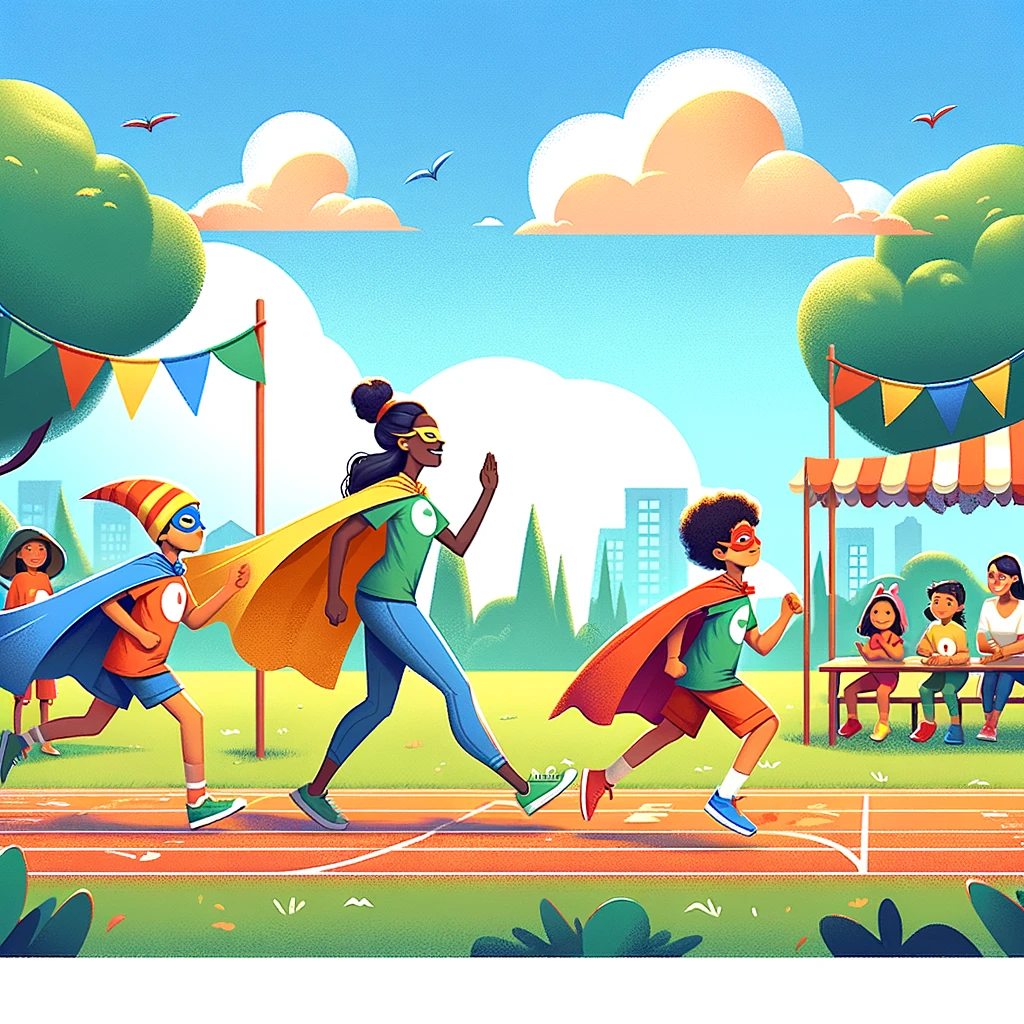
An hour of the funniest relay format there is — teams race to a clothes pile, don the full outfit (hat, coat, boots, handbag), strike the mandatory pose, strip it off and tag the next runner. Adult clothes on small people is the engine; the pose is the genius rule.
Last updated
Before you start
The dress-up relay runs on one physical fact — small children inside enormous adult clothes are inherently, endlessly funny, to themselves most of all. Each team's pile holds a full outfit (the bigger the better — dad's coat, wellies, a sunhat, the handbag); each runner must wear everything at once, correctly-ish, before the return leg.
The rule that turns a race into a show: the pose. Fully dressed, each runner must strike a pose and hold it for a judge's count of three — catalogue model, superhero, teapot — before stripping. The pose forces a pause at peak ridiculousness, gives the audience its moment, and stops the whole thing becoming a blur of flying wellies. The judge's count is a position of great power and should rotate.
How it goes
Pile assembly
Raid the wardrobe for the biggest, silliest, most robust items — parity between piles matters more than contents (two coats of equal awkwardness; two hats of equal collapse). Lay the piles at the far end, mark the start line, and demonstrate the full cycle yourself once, at speed, because watching a parent fight into a coat against the clock sets the tone with total efficiency.
Team draft
Two teams, mixed sizes — the format self-handicaps beautifully, since big kids run faster but small kids vanish into the coat and emerge somehow wearing it sideways, which costs seconds and wins hearts. Team names, a practice pose each, and the judge installed on the chair with the full weight of office.
The relay
Run, dress (everything ON — the judge rules on flagrant hat-balancing), POSE for the count of three, undress, pile-neaten (the sneaky rule that keeps round two fair), run back, tag. First team fully cycled wins the heat. Run at least three heats with pose themes per round — superheroes, ballet, "grandma finding out the biscuits are gone" — because the themes are where it ascends.
The gala final
The championship heat with everything on the line, then the awards — fastest cycle, best pose (judged from the photos, deliberated aloud), and the coveted Most Dignified Under Pressure. The photo reel gets reviewed on the sofa immediately, which is the second act of laughing the format quietly guarantees.
Make it fit your kids
They run one glorious leg with a helper on buttons, and their pose — whatever it is — wins its category by acclamation. The coat will wear them; this is the correct outcome.
The format's heartland — genuine speed-dressing tactics emerge (boots first, hat last), pose themes get demanded, and the judge's chair becomes a career ambition.
They optimise — sleeve-rolling strategies, tag-zone efficiency, lobbying the judge. Give them a heat as costume designers, building new piles with one themed twist each.
They'll claim exemption and fall to the photographer role, from which the pose round pulls them in within two heats. Their run, when it comes, is the fastest and the most theatrically reluctant.
Free by definition — the wardrobe already owns everything, and the charity-shop upgrade (one spectacular hat per pile) costs a pound and pays dividends for years.
If it’s going really well
- Theme piles — pirate pile versus superhero pile, and the relay becomes a quick-change theatre festival.
- The blindfold round — dresser guided by team voice only; chaos, but structured chaos.
- Photo-story afterwards — the pose pictures captioned into a fashion catalogue of majestic nonsense.