DIY Bird Feeder
An hour-long DIY bird feeder activity for kids: build, fill and hang a simple bottle feeder, then track first visitors from the kitchen window. Easy to make and genuinely useful for nature learning.
Last updated
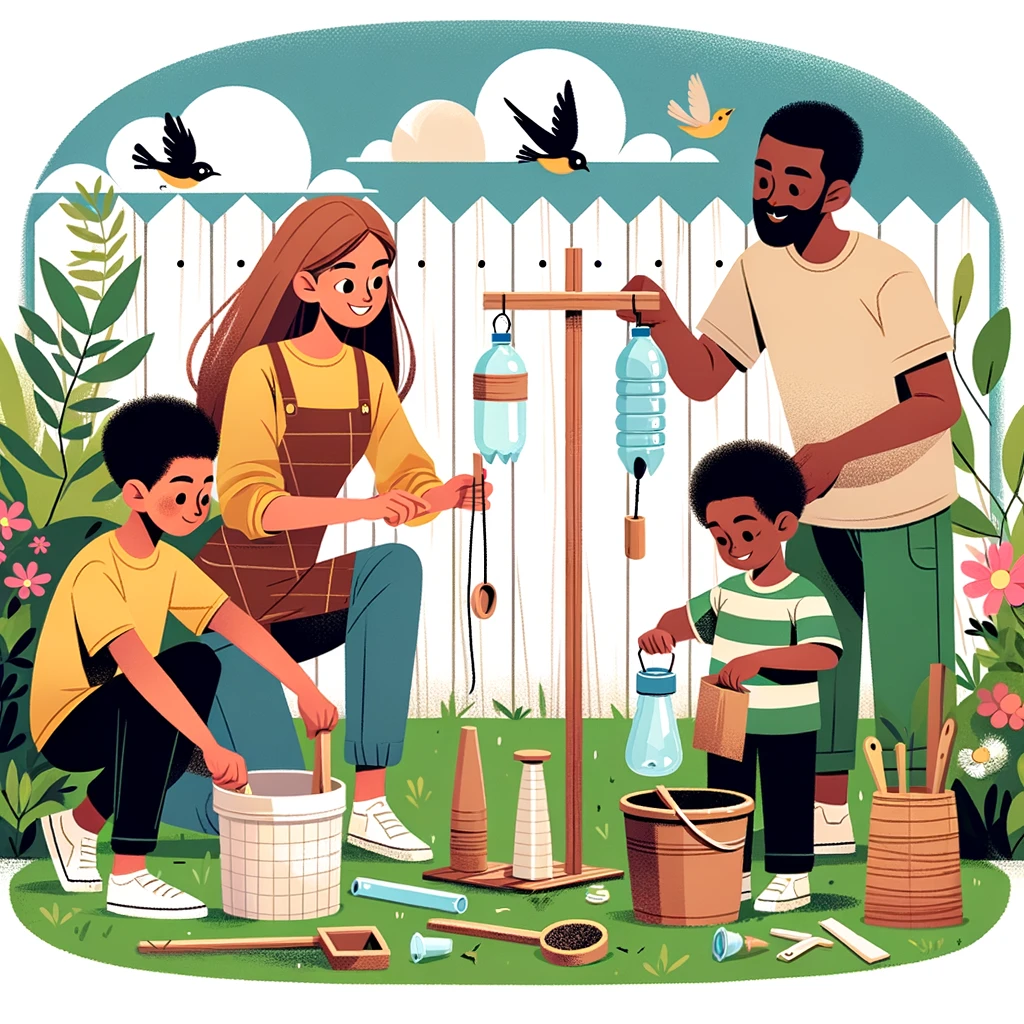
Before you start
The bottle feeder is the classic for a reason — a clean plastic bottle, two wooden spoons pushed through at staggered heights, and the spoon handles become perches while the bowls catch seed spilling from the holes. It's genuinely clever, kids can genuinely build most of it, and it genuinely works: the first blue tit lands within days and the builders take it personally, in the best way.
Placement decides everything: visible from a window the family actually sits near, high enough to frustrate cats, close enough to a bush for the birds' getaway. A feeder in the wrong spot feeds nobody and teaches only patience; a feeder outside the breakfast window makes ornithologists out of cereal-eaters by the weekend.
How it goes
The design brief
Study the bottle and plan — two spoons at different heights, angled slightly down toward the bowl so seed trickles onto the tray. Mark the four holes with a pen (the marking is a kid job with real consequences, which is why it's a good one). One small seed-release hole gets marked just above each spoon bowl.
Construction
Adult starts the holes with the skewer; kids widen and push the spoons through — the moment the spoon slides home and sits right is the build's little triumph. Seed holes widened to trickle size (start small; enlarging is easy, shrinking is not — a lesson with wide applications). String tied round the neck with the knot doubled by whoever's proudest of their knots.
The filling
Funnel in, seed poured — a two-child job (one holds, one pours) engineered for exactly the amount of spillage that keeps it fun. Cap on. Test the trickle onto the spoon bowls; adjust the tilt if the tray sits empty. The feeder gets a name, because everything built in this house gets a name.
The grand opening
Hung in the strategic spot — window-visible, cat-proof height, bush-adjacent — with a small ceremony as the family officially opens the establishment. Then the hard part, announced honestly — birds take days to trust a new feeder, so the watch begins tomorrow, and the first customer (logged, dated, identified against the window sheet) belongs to whoever spots it.
Make it fit your kids
Seed-pouring directors and official openers — the funnel stage was designed by providence for three-year-olds. Their customer-spotting from the window is genuinely useful; small eyes catch movement first.
Full builders — marking, widening, spoon-threading and the naming rights. The daily check becomes theirs, and the first-customer log entry is a certificate-grade event.
They can run the whole build and then the science — which seed empties fastest, which spoon height gets traffic, a customer census by species kept over a month. The feeder becomes data.
The upgrade path — a squirrel-baffle engineering challenge (genuinely hard, universally humbling) or a second feeder design of their own devising, tested head-to-head against Colin.
The bottle was recycling, the spoons were the kitchen's spares, and a kilo of basic seed mix costs a pound or two and lasts weeks — the whole establishment opens for under two pounds.
If it’s going really well
- The pine-cone quick feeder — lard and seed pressed into cones, hung same-day, for instant service while the bottle earns trust.
- The census month — a tally chart of customers by species; the data joins the national garden birdwatch in January.
- Graduate to the birdhouse build — the customers you feed in winter house-hunt in spring, and you know a builder.