Make Your Own Board Game
A half-day create-your-own-board-game activity: choose mechanics, prototype quickly, then playtest and revise. Kids finish with a game they can replay, not a one-off craft.
Last updated
Before you start
Every kid who's flipped a Monopoly board has strong opinions about game design; this is the day those opinions face reality. The pitch to them is simple — we're making a real game, and tonight we play it for keeps.
The structural secret: steal a skeleton, then decorate it. A start-to-finish race track with hazard squares is thirty minutes of work and always functions; the theme (haunted mansion, dinosaur escape, journey through the family's actual house) is where the invention goes. Kids who start by inventing mechanics from scratch produce beautiful unplayable chaos and hit a wall by eleven. Skeleton first, madness on top.
How the day goes
The pitch meeting
Everyone pitches a theme; the table votes or merges the best two (dinosaur haunted mansion is a merger that's served us well). Then the skeleton decision — race to the end, collect-the-set, or escape-before-the-timer. One game, built together, beats three solo half-games — but two older kids can run rival studios if the peace requires it.
Building the board
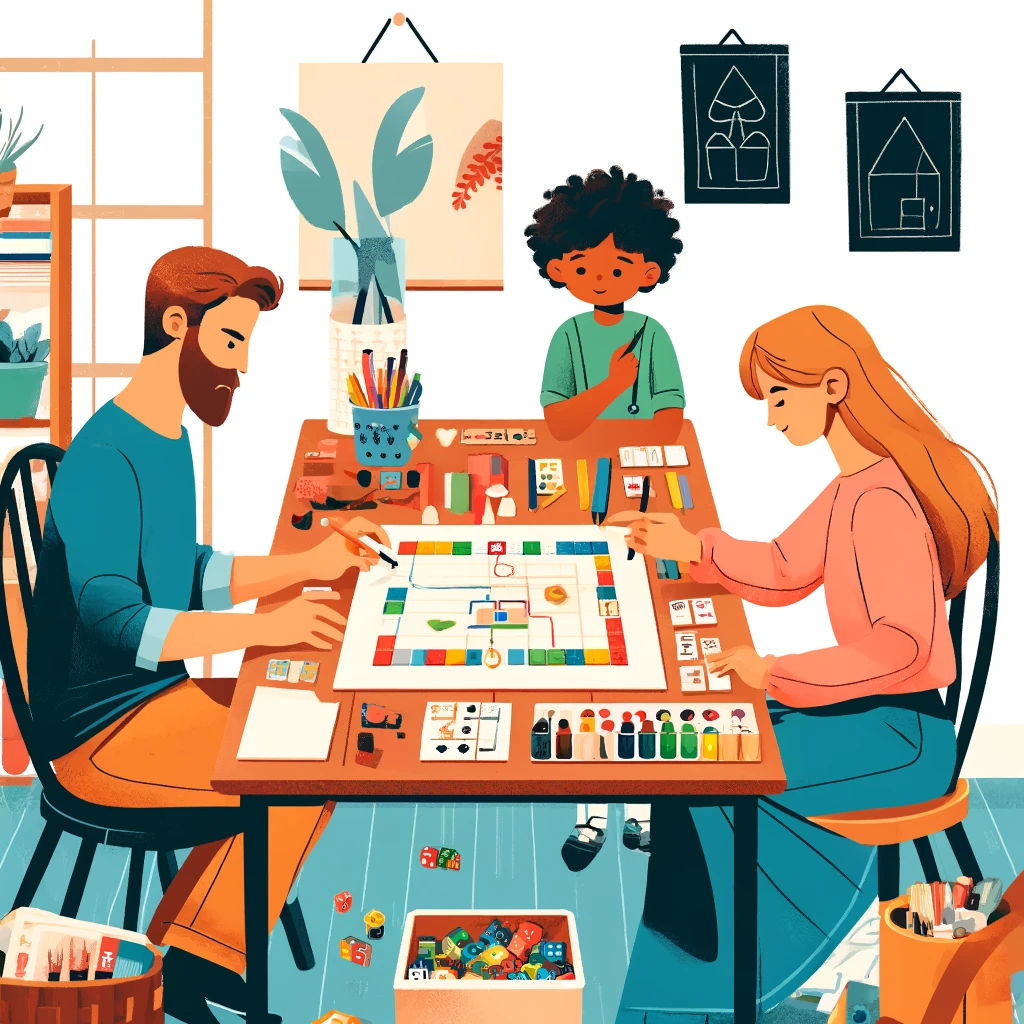
Rule the track, number the squares, then decorate — every fifth square or so does something (skip ahead, lose a turn, draw a card). Write the chance cards to fit the theme, and let the kids write them dark; "the dinosaur eats your shoe, miss two turns" is the register that keeps the afternoon funny.
The rulebook lunch
Over lunch, write the rules down — actually down, numbered, on paper. What happens on a draw? Exact roll to finish? Rules that live in someone's head cause the 3pm argument; rules on paper just cause amendments.
The playtest
Play the game for real. It will break — a square that traps everyone, a card that's too powerful, a track that takes eleven years. This is the good part. Each break gets a sticky-note patch and play continues. Designers call this iteration; kids call it fixing rule seven, and they defend those patches like case law.
Launch night prep
Final rules copied out neatly, box decorated if a shoebox is going spare, the game gets its official name and cover art. Then schedule the launch — tonight, after dinner, full family, winner gets bragging rights and their name inside the box lid as champion.
Make it fit your kids
Co-designers of decoration and chief dice-rollers. Build one square that's just for them ("everyone roars like a dinosaur") and they're fully invested players by the afternoon.
Card-writers and rule-arguers in chief. The playtest teaches gracious losing better than any bought game because they can amend what felt unfair — once, in writing, by agreement.
They'll want real mechanics — money, trading, alliances. Let them. Their game will be too complicated, the playtest will prove it, and cutting a beloved rule is the day's deepest lesson.
Rival studio. Their game targets the family's actual dynamics ("Mum loses a turn if she mentions bedtime") and gets played more than yours. Print-and-play polish via a borrowed laminator if they're keen.
Fully free — cereal-box board, buttons for counters, and a dice from any other game box. If you want one upgrade, a two-pound pack of blank playing cards makes the chance deck feel professional.
If it’s going really well
- The expansion pack — new cards and a rule the following weekend, once the base game has been played to death.
- Game night league table on the fridge, championship contested monthly.
- Post the rules and a photo to grandparents and challenge them to build the game at their house from instructions alone — the ultimate rules-writing test.