Miniature Garden
A half-day miniature garden activity for kids: gather materials, design the layout, then build a tiny world with living elements. Great for calm focus and follow-on care routines.
Last updated
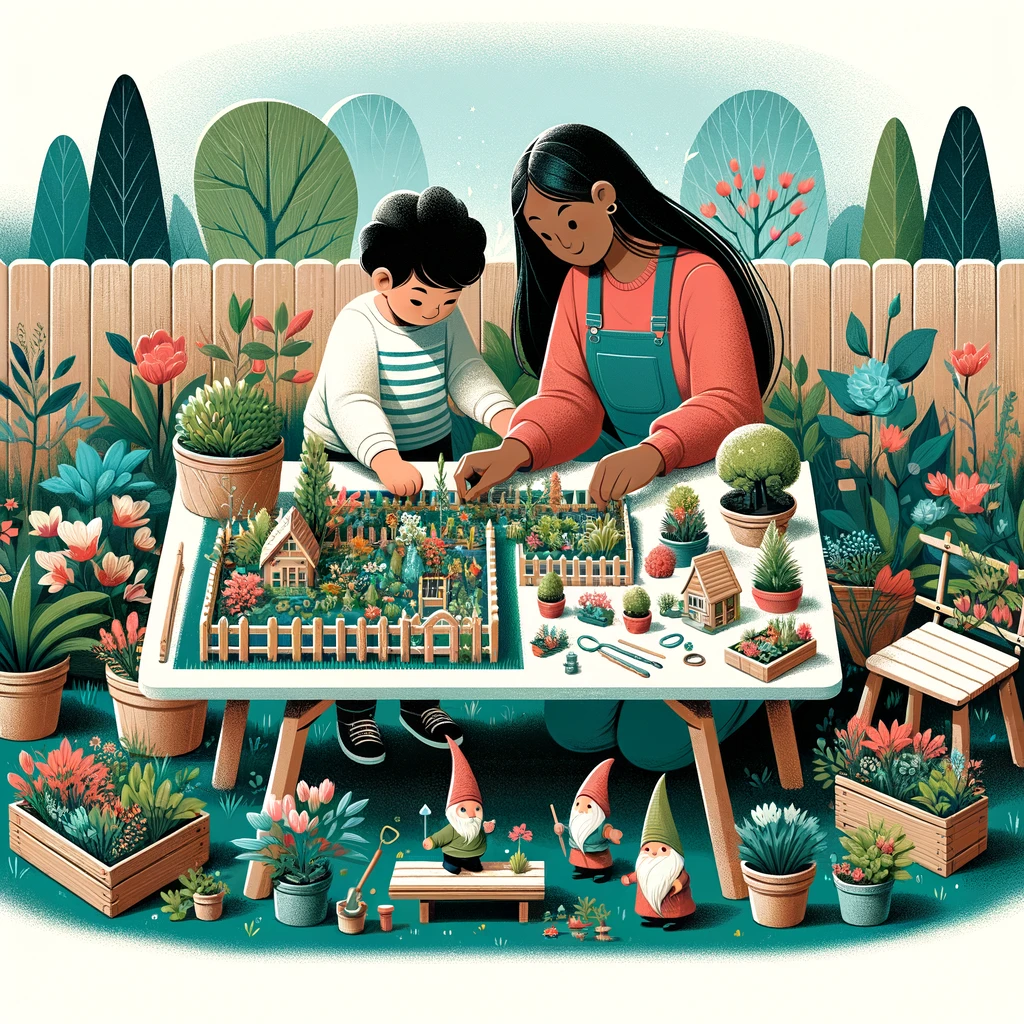
Before you start
A miniature garden is a landscape the size of a washing-up bowl, and the scale is the magic — a child who won't weed a real border will landscape a tiny one for two hours, because in this garden they're the giant in charge.
What separates a garden from a mud tray: real plants and a made thing. One small living plant (a supermarket herb split into pieces, moss lifted from the patio) makes it a garden that needs tending; one built object — the twig bench, the lolly-stick ladder — makes it a place somebody tiny lives. Everything else is decoration, and decoration is where the kids need no help at all.
How it goes
The gathering expedition
A walk with a bag and a shopping list — flat pebbles for paths, forked twigs for trees, moss if it's going spare, one special thing each (the acorn cap teacup finds its owner, not vice versa). Gathering is half the activity and better than any craft-shop haul; take it slow.
Groundworks
Soil into the container, hills and valleys sculpted by hand, and the pond lid sunk level with the ground — sinking it flush is deeply satisfying and takes three attempts. Plant the plants first, before the landscaping fills every gap; the tree goes in while there's still room for roots.
Landscaping
Paths laid pebble by pebble, the moss lawn patted down, gravel drives, bark cliffs. Then the engineering — a twig bench lashed or glued, a ladder, a washing line of string with leaf clothes. This is the deep-concentration phase; refill drinks and stay out of the planning department.
Moving-in day
The resident arrives — a small figure, a made peg person, or an unseen occupant who's "just out" (younger kids handle invisible residents with total ease). First watering with a spoon or a tiny jug, official photos from garden-designer angles, and the garden takes its permanent spot — somewhere visible, because it will be checked daily.
Make it fit your kids
Theirs is a sensory tray with a garden theme — patting soil, parking pebbles, relocating the resident forty times. Expect the pond to be excavated and reinstalled hourly.
The core audience — full landscape vision, furniture engineering, and stories about the resident that develop sequels. The daily watering genuinely sticks at this age.
They go architectural — split-level gardens, working gates, a rope bridge between two containers. Introduce them to the word "terrarium" and stand back.
Reframe as terrarium- or bonsai-adjacent and it lands — a closed jar world or a styled desert tray for their own shelf, built to their aesthetic, no residents required.
Genuinely zero-spend — garden soil, gathered materials and a split herb from the kitchen windowsill. The container is whatever leaky bowl was heading for the bin.
If it’s going really well
- Seasonal refits — conker furniture in autumn, a foil ice rink at Christmas, blossom lawns in spring.
- The resident's story — who lives here, written and illustrated, one page per week.
- A second garden built as a gift for a grandparent's windowsill, resident included.